country
United Kingdom
Sixty years of British music: the engine room of modern pop
Top 10 Hitlist
The defining tracks from this region
Hey Jude
The BeatlesThe most consequential pop group in history. Formed in Liverpool in 1960 around John Lennon, Paul McCartney, George Harrison, and Ringo Starr, the Beatles spent their seven-year recording career inventing the conventions modern pop still operates inside: the self-contained band, the album as artistic statement, studio production as compositional tool. Their break-up in 1970 ended the decade they had defined.
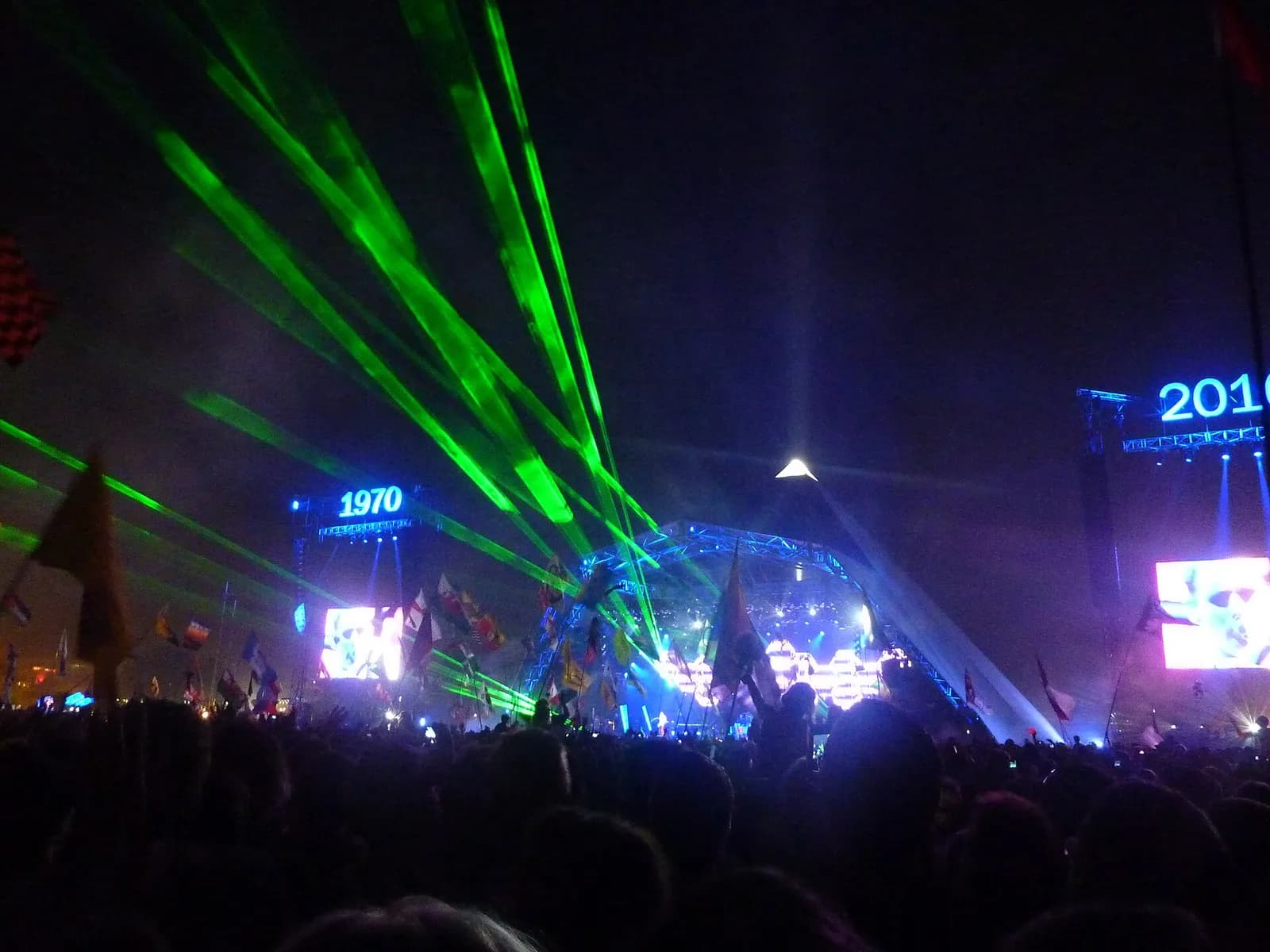
British pop and rock has set the agenda for most of what the rest of the world has made since 1960. The Beatles invented the modern guitar group; the Rolling Stones built stadium rock; the Who and the Kinks gave it songwriting. The 1970s split into Pink Floyd's progressive sweep, Bowie's glam-rock theatre, Queen's operatic stadium-rock theatre, Black Sabbath's invention of heavy metal in Birmingham, and the punk reset of the Sex Pistols and the Clash. Post-punk Manchester (Joy Division, New Order, the Smiths) and synth-pop (Depeche Mode, Eurythmics, Kate Bush) defined the 1980s. The 1990s belonged to Bristol's trip-hop, rave's stadium reach through the Prodigy and the Chemical Brothers, and Britpop's chart return with Oasis, Blur, Pulp, and Radiohead. The 2000s, 2010s, and 2020s have run on UK garage, grime, and a generation of rappers from Dizzee Rascal to Stormzy, Dave, and Little Simz, alongside Adele's ballad dominance and the global pop reach of Ed Sheeran, Dua Lipa, and Harry Styles. The conversation has barely paused.
Moments
The moments United Kingdom's music history turned on

Forty-two minutes on a roof, and then never again
On a cold January lunchtime the Beatles climbed onto the roof of their own office at 3 Savile Row and played until the police came up the stairs. It was their last performance in public.

ABBA win Eurovision in Brighton and the world learns their name
On 6 April 1974 four Swedes in satin and platform boots sang Waterloo at the Brighton Dome, with a conductor dressed as Napoleon. Sweden had never won the contest. Pop was about to change hands.
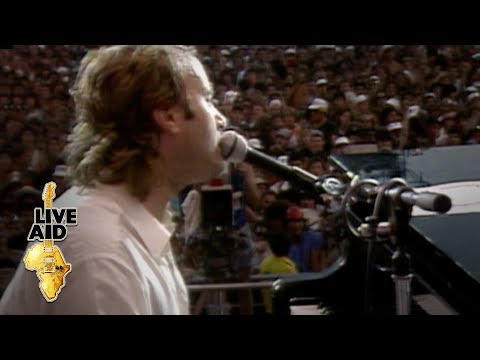
The drummer who played both Live Aids in one day
Phil Collins sang In the Air Tonight at Wembley in the afternoon, boarded Concorde, and sang it again in Philadelphia the same night, then sat behind the drums for Led Zeppelin.
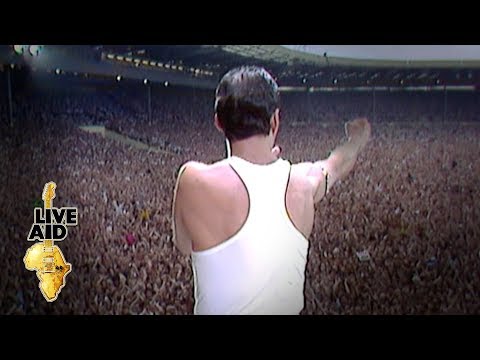
Twenty minutes that turned a stadium into one voice
Queen were not the headliners at Live Aid. Freddie Mercury walked out at 6.41pm anyway and, by the end of Radio Ga Ga, 72,000 people were clapping in time with him.
Frequently Asked Questions
Why has UK pop music had such global influence?+
The British Invasion of 1964, led by the Beatles, opened American radio and TV to UK acts for the first time. Once that door was open, a continuous pipeline of UK artists shaped global pop for the next six decades: the Rolling Stones, Led Zeppelin, Pink Floyd, Bowie, the Sex Pistols, Joy Division, the Smiths, Massive Attack, the Prodigy, Oasis, Radiohead, Adele, and Stormzy. The combination of a small geographic area, a major recording industry, the BBC's editorial weight, and a melting-pot urban culture has kept the output continuous.
Who invented heavy metal?+
Black Sabbath, in Birmingham, in 1968. Tony Iommi's downtuned guitar (a result of an industrial accident at age 17 that damaged his fingertips), Geezer Butler's bass, Bill Ward's drumming, and Ozzy Osbourne's voice produced the genre's founding sound. The self-titled 1970 debut and Paranoid the same year established the heavy metal template. Led Zeppelin and Deep Purple contributed parallel innovations in heavier blues-rock, but Sabbath is the consensus founder.
What was Britpop and is it still going?+
Britpop was the mid-1990s movement that pushed back against American grunge and reasserted British guitar-pop. The Oasis vs Blur chart battle in August 1995 (Country House vs Roll With It) became national news; Pulp's Common People was the era's most precise song; Radiohead transcended the moment with OK Computer (1997). The original Britpop wave ended around 1997 with The Verve and Radiohead leaving it behind, but the indie lineage continues through bands like Arctic Monkeys.
What is grime and how is it different from US hip-hop?+
Grime emerged in East London around 2002-2003 out of UK garage and bashment. Its signature is a 140 BPM beat (faster than most US rap), MC-led delivery rather than rapper-led storytelling, and distinctly British accents and slang. Dizzee Rascal's Mercury-Prize-winning Boy in da Corner (2003) is the founding album. By the mid-2010s grime had crossed into mainstream chart success through Skepta, Stormzy, Dave, and Little Simz, each of whom has won the Mercury Prize.
Which UK city has produced the most influential music?+
London by volume, but Manchester per capita. Joy Division, New Order, the Smiths, the Stone Roses, Oasis, and the Chemical Brothers all came from Greater Manchester, and the city's Hacienda club was the engine of the late-1980s acid-house revolution. Birmingham invented heavy metal, Liverpool produced the Beatles, Sheffield gave us Pulp and the entire post-Warp electronic scene, and Bristol birthed trip-hop. The geographic concentration of distinct scenes across small cities is itself the answer.
Who are the most internationally recognised UK women in music?+
Kate Bush, Annie Lennox (Eurythmics), Sade, the Spice Girls, Amy Winehouse, Adele, and most recently Dua Lipa, Florence Welch, and Little Simz. Kate Bush's 2022 chart return with Running Up That Hill via Stranger Things made her one of the few artists to top global charts with a 37-year-old song. Adele's 21 and 30 are the best-selling UK albums of their respective decades. Amy Winehouse's Back to Black (2006) reshaped 21st-century pop.
Sources & References
- 1Rip It Up and Start Again: Postpunk 1978-1984 — Simon Reynolds, 2005Book
- 2Energy Flash: A Journey Through Rave Music and Dance Culture — Simon Reynolds, 1998Book
- 3Revolution in the Head: The Beatles' Records and the Sixties — Ian MacDonald, 1994Book
- 4England's Dreaming: Sex Pistols and Punk Rock — Jon Savage, 1991Book
- 5Inner City Pressure: The Story of Grime — Dan Hancox, 2018Book
- 6Is This the Real Life? The Untold Story of Queen — Mark Blake, 2010Book
- 7Music of the United Kingdom — Wikipedia Contributors, 2025
- 8How grime took over the UK charts — BBC News, 2017
- 9The Mercury Prize at 30 — The Guardian, 2022
Further Reading
About This Article
This page is based on documented music history, artist biographies, chart data, award records, and cross-referenced sources from music journalism and academic research.
Curated by the timeline.music editorial team.
▸Read the timeline as text
The sound of United Kingdom, decade by decade: 10 genres and 53 artists, from the 1690s to the 2020s.
- 1690s
- Classical with Henry Purcell.
- 1900s
- Classical with Edward Elgar.
- 1910s
- Classical with Gustav Holst and Ralph Vaughan Williams.
- 1940s
- Classical with Benjamin Britten.
- 1960s
- British Rock with The Beatles, The Rolling Stones, The Kinks, The Who, Pink Floyd, David Bowie and T. Rex; Heavy Metal with Led Zeppelin.
- 1970s
- British Rock with The Beatles, The Rolling Stones, The Kinks, The Who, Pink Floyd, Genesis, Queen, David Bowie, T. Rex and Elton John; Heavy Metal with Black Sabbath, Led Zeppelin and Iron Maiden; British Punk with Sex Pistols and The Clash; Post-Punk / New Wave with Joy Division, The Cure and Kate Bush.
- 1980s
- British Rock with The Rolling Stones, The Kinks, The Who, Pink Floyd, Genesis, Queen, David Bowie and Elton John; Heavy Metal with Black Sabbath and Iron Maiden; British Punk with The Clash; Post-Punk / New Wave with Joy Division, New Order, The Cure, The Smiths, Depeche Mode, Kate Bush and Eurythmics; British Pop with Wham! and Phil Collins; Rave / Electronic with Underworld; Trip-Hop with Massive Attack; Britpop / Indie with Blur and Pulp.
- 1990s
- British Rock with The Rolling Stones, The Kinks, The Who, Pink Floyd, Genesis, Queen, David Bowie and Elton John; Heavy Metal with Black Sabbath and Iron Maiden; Post-Punk / New Wave with New Order, The Cure, Depeche Mode, Kate Bush and Eurythmics; British Pop with Phil Collins, Spice Girls, Take That and Coldplay; Rave / Electronic with The Prodigy, The Chemical Brothers and Underworld; Trip-Hop with Massive Attack and Portishead; Britpop / Indie with Oasis, Blur, Pulp and Radiohead.
- 2000s
- British Rock with The Rolling Stones, The Who, Pink Floyd, Genesis, David Bowie and Elton John; Heavy Metal with Black Sabbath and Iron Maiden; Post-Punk / New Wave with New Order, The Cure, Depeche Mode and Kate Bush; British Pop with Phil Collins, Spice Girls, Take That, Coldplay, Amy Winehouse and Adele; Rave / Electronic with The Prodigy, The Chemical Brothers and Underworld; Trip-Hop with Massive Attack and Portishead; Britpop / Indie with Oasis, Blur, Pulp, Radiohead and Arctic Monkeys; Grime / UK Rap with Dizzee Rascal and Skepta.
- 2010s
- British Rock with The Rolling Stones, The Who, Pink Floyd, David Bowie and Elton John; Heavy Metal with Black Sabbath and Iron Maiden; Post-Punk / New Wave with New Order, The Cure, Depeche Mode and Kate Bush; British Pop with Phil Collins, Spice Girls, Take That, Coldplay, Amy Winehouse, Adele, Ed Sheeran, Dua Lipa and Harry Styles; Rave / Electronic with The Prodigy, The Chemical Brothers and Underworld; Trip-Hop with Massive Attack and Portishead; Britpop / Indie with Blur, Pulp, Radiohead and Arctic Monkeys; Grime / UK Rap with Dizzee Rascal, Skepta, Stormzy, Dave and Little Simz.
- 2020s
- British Rock with The Rolling Stones, Pink Floyd and Elton John; Heavy Metal with Iron Maiden; Post-Punk / New Wave with The Cure and Depeche Mode; British Pop with Take That, Coldplay, Adele, Ed Sheeran, Dua Lipa, Harry Styles and Olivia Dean; Rave / Electronic with The Chemical Brothers and Underworld; Trip-Hop with Massive Attack; Britpop / Indie with Blur and Arctic Monkeys; Grime / UK Rap with Dizzee Rascal, Stormzy, Dave and Little Simz.