country
German Democratic Republic
DDR Rock: East Germany's Underrated Sound
Listen through German Democratic Republic
5 defining tracks in the order they were released, from 1974 to 1987, each with a line on why it matters.
Preview: plays 5 of 10 tracks.
- 1970s
- 1980s
30-second previews, streamed from Apple.
The Hitlist
The defining tracks from this region
Preview: 5 of 10 tracks
Über sieben Brücken musst du gehn
KaratTheir 1982 album Der blaue Planet was the best-selling album by any East German artist, moving over 1.3 million copies. 'Über sieben Brücken musst du gehn' became one of the most recognized German-language songs of all time, later covered by Peter Maffay for West German audiences.
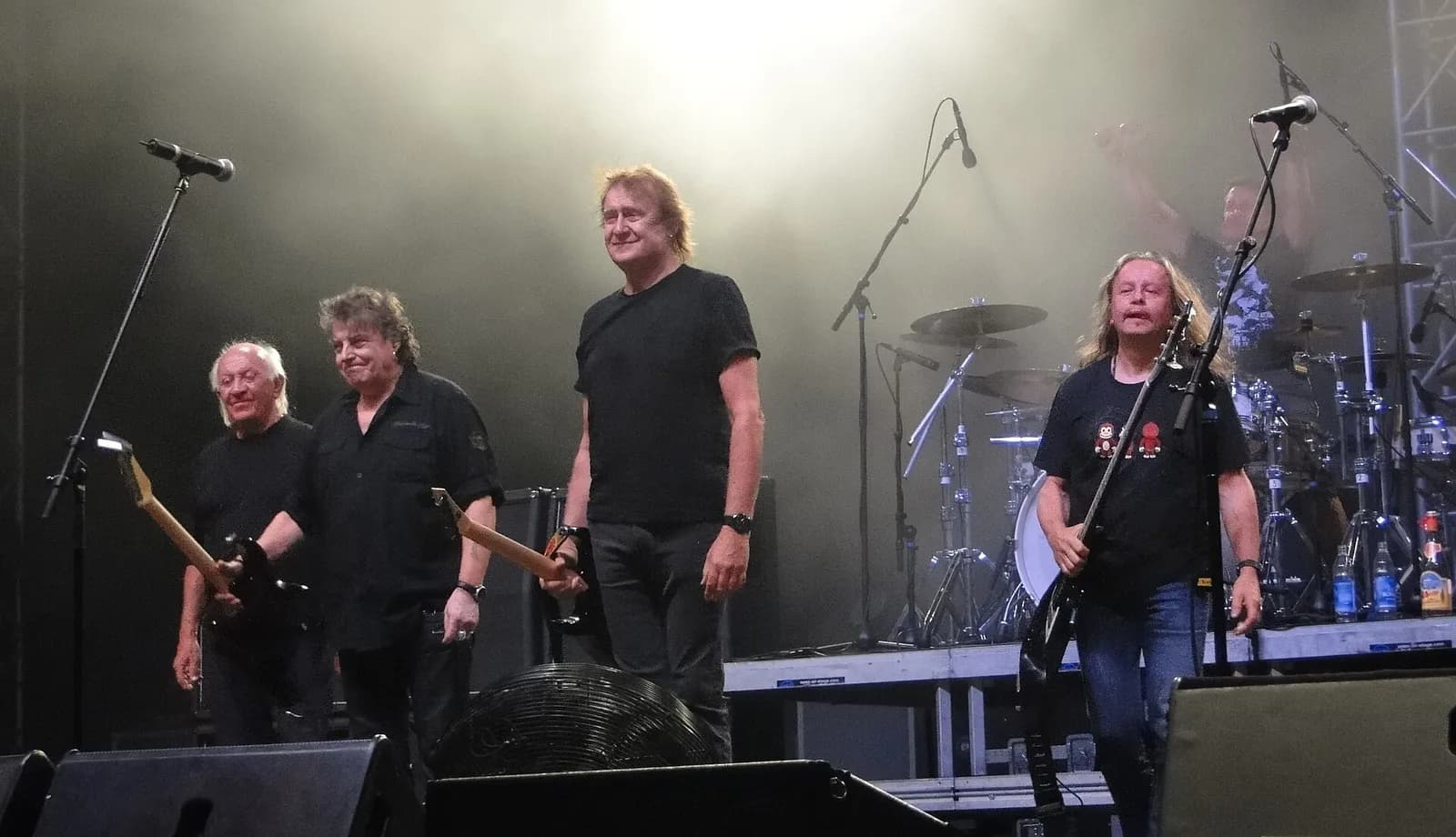
For forty years the DDR cultivated a parallel musical universe. State label Amiga released everything from sanctioned Schlager to Ostrock bands like Puhdys, Karat, and City, who filled stadiums while threading subversive lyrics past the censors. Underground punk and new wave scenes in East Berlin and Leipzig became rehearsal rooms for the revolution that would eventually tear down the Wall. The DDR's music tells the story of a society creating, conforming, and resisting, all on vinyl.
Frequently Asked Questions
What is Ostrock?+
Ostrock is rock music that developed in the German Democratic Republic (DDR). Bands like Puhdys, Karat, and City defined the style by singing in German, as the state required, and releasing through the monopoly label Amiga. Despite strict censorship, many musicians managed to weave socially critical messages into their lyrics.
What was the most popular band in the DDR?+
Puhdys were the most commercially successful band in the DDR, selling more than 18 million albums. They were the first East German band to tour West Germany in 1976 and received the DDR National Prize in 1982. For three decades they were East Germany's stadium rock band.
Was punk music allowed in the DDR?+
Punk was classified as hostile by the DDR state. The scene emerged around 1980 in East Berlin and Leipzig and survived in church basements and squatted houses under constant Stasi surveillance. Bands like Schleim-Keim, Feeling B, and Namenlos risked arrest and prison sentences for music that was classified as anti-state agitation.
What was Amiga Records?+
Amiga was the state-owned record label of the DDR and the only label permitted to release popular music in the country. As a monopoly, Amiga controlled which music was produced and distributed. Despite these restrictions, the label released a surprisingly broad range, from Schlager and Ostrock to jazz and blues.
Which DDR musicians were banned or forced into exile?+
Several prominent musicians were affected by censorship. Wolf Biermann was banned from performing in 1965 and stripped of his citizenship in 1976, which triggered the largest artist-led protest in DDR history. Bettina Wegner had to leave the DDR in 1983. Manfred Krug moved to West Berlin in 1977. The Klaus Renft Combo was banned three times, the last in 1975 on Honecker's personal order. Nina Hagen left the country in 1976 after her stepfather Biermann was expatriated.
Sources & References
- 1Rock in der DDR 1964 bis 1989 — Michael Rauhut, 2002Book
- 2Wir wollen immer artig sein... Punk, New Wave, HipHop und Independent-Szene in der DDR 1980-1990 — Ronald Galenza and Heinz Havemeister, 1999Book
- 3Bye Bye, Lübben City: Bluesfreaks, Tramps und Hippies in der DDR — Michael Rauhut and Thomas Kochan, 2004Book
- 4Ostrock — Wikipedia, 2024
- 5Amiga (record label) — Wikipedia, 2024
- 6Wolf Biermann expatriation, 1976 — Wikipedia, 2024
Further Reading
About This Article
This page is based on documented East German music history, Amiga label discographies, verified artist biographies, and cross-referenced sources from German music journalism and academic research on culture and censorship in the DDR.
Curated by the timeline.music editorial team. Every YouTube ID on this page has been verified live against the original recording.
▸Read the timeline as text
The sound of German Democratic Republic, decade by decade: 5 genres and 18 artists, from the 1960s to the 1990s.
- 1960s
- Schlager with Frank Schöbel; Liedermacher with Wolf Biermann and Manfred Krug; Ostrock with Klaus Renft Combo and Puhdys.
- 1970s
- Schlager with Frank Schöbel, Veronika Fischer and Gerd Christian; Liedermacher with Wolf Biermann, Manfred Krug, Bettina Wegner and Holger Biege; Ostrock with Klaus Renft Combo, Puhdys, Nina Hagen, City, Karat, Silly and Karussell; Electronic with Reinhard Lakomy.
- 1980s
- Schlager with Frank Schöbel, Veronika Fischer and Gerd Christian; Liedermacher with Bettina Wegner, Holger Biege and Gerhard Gundermann; Ostrock with Puhdys, City, Karat, Silly and Karussell; Electronic with Reinhard Lakomy; Punk with Feeling B and Sandow.
- 1990s
- Schlager with Frank Schöbel and Gerd Christian; Liedermacher with Gerhard Gundermann; Ostrock with Puhdys, City, Karat, Silly and Karussell; Electronic with Reinhard Lakomy; Punk with Feeling B and Sandow.