country
Germany
From Bach to Deutschrap: three centuries of musical reinvention
Listen through Germany
5 defining tracks in the order they were released, from 1704 to 1983, each with a line on why it matters.
Preview: plays 5 of 15 tracks.
- 1700s
- 1710s
- 1720s
- 1730s
- 1740s
- 1750s
- 1760s
- 1770s
- 1780s
- 1790s
- 1800s
- 1810s
- 1820s
- 1830s
- 1840s
- 1850s
- 1860s
- 1870s
- 1880s
- 1890s
- 1900s
- 1910s
- 1920s
- 1930s
- 1940s
- 1950s
- 1960s
- 1970s
- 1980s
30-second previews, streamed from Apple.
The Hitlist
The defining tracks from this region
Preview: 5 of 15 tracks
99 Luftballons
NenaNena's '99 Luftballons' is the most internationally successful German-language pop song ever, reaching number one across Europe and number two in the US. The anti-war anthem defined the Neue Deutsche Welle era and remains an enduring symbol of 1980s Cold War culture. She later reinvented herself as a children's music artist and TV personality.
From Kraftwerk's electronic revolution in Düsseldorf to the streaming dominance of Apache 207, Germany has continually reinvented its musical identity. Krautrock rewired global pop, Neue Deutsche Welle conquered the 1980s, and Berlin's techno scene became a cultural export rivalling the automobile. Today, German hip-hop dominates the national charts while rock legends like Rammstein fill stadiums worldwide.
Moments
The moments Germany's music history turned on

Frequently Asked Questions
What is the most popular music genre in Germany?+
Hip-hop and rap have dominated the German charts since the late 2010s, with artists like Capital Bra, Apache 207, and Nina Chuba consistently topping the singles chart. However, Schlager and Deutschpop remain hugely popular in live music and television, while techno and electronic music define Berlin's globally renowned club scene.
Last reviewed: 2026-04
What is Krautrock and why is it important?+
Krautrock is an experimental music movement that emerged in West Germany in the late 1960s and 1970s. Bands like Kraftwerk, Can, and Tangerine Dream fused rock with electronic innovation, essentially inventing synth-pop, ambient, and influencing the development of techno. It is widely regarded as Germany's most significant contribution to global popular music.
Who are the biggest German musicians of all time?+
Herbert Grönemeyer is Germany's best-selling recording artist with over 18 million records sold. The Scorpions are the most internationally successful German rock band with 100 million records worldwide. Kraftwerk are considered among the most influential artists in music history. In the modern era, Apache 207 dominates the streaming charts.
What was Neue Deutsche Welle?+
Neue Deutsche Welle (NDW) was a German new wave movement that peaked between 1980 and 1984. Combining punk energy with synthesizers and German-language lyrics, it produced international hits including Nena's '99 Luftballons' and Peter Schilling's 'Major Tom'. The movement collapsed commercially by 1985 but left an enduring cultural mark.
Why is Berlin famous for techno music?+
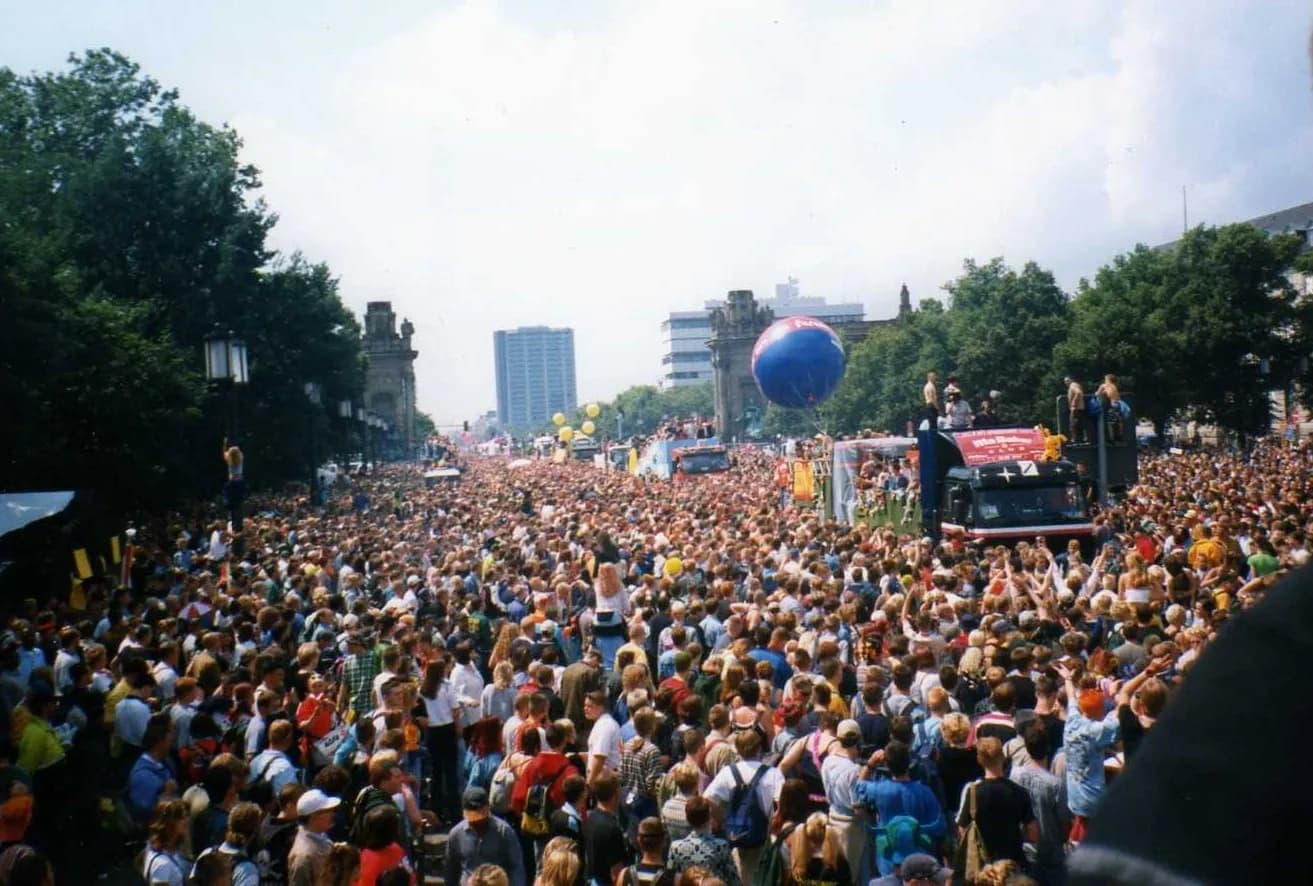
After German reunification in 1990, abandoned buildings in former East Berlin became improvised clubs, giving birth to a vibrant techno scene. Venues like Tresor and later Berghain became global pilgrimage sites. The Love Parade drew millions of ravers, and Berlin's club culture was recognized by UNESCO as intangible cultural heritage.
Sources & References
- 1Krautrocksampler: One Head's Guide to the Great Kosmische Musik — Julian Cope, 1995Book
- 2Future Days: Krautrock and the Building of Modern Germany — David Stubbs, 2014Book
- 3Kraftwerk: Man, Machine and Music — Pascal Bussy, 2004Book
- 4Der Sound der Stadt: Berlin's Music History — Felix Denk, Sven von Thülen, 2012Book
- 5Offizielle Deutsche Charts: Year-End Rankings — GfK Entertainment, 2025
Further Reading
About This Article
This page is based on documented music history, verified chart data from GfK Entertainment / Offizielle Deutsche Charts, and BVMI certification records. Artist selections reflect both cultural significance within Germany and international impact, spanning from the post-war Schlager era to the streaming-dominated present.
Curated by the timeline.music editorial team.
▸Read the timeline as text
The sound of Germany, decade by decade: 8 genres and 42 artists, from the 1720s to the 2020s.
- 1720s
- Classical with Johann Sebastian Bach and George Frideric Handel.
- 1800s
- Classical with Ludwig van Beethoven.
- 1830s
- Classical with Felix Mendelssohn and Robert Schumann.
- 1860s
- Classical with Richard Wagner and Johannes Brahms.
- 1890s
- Classical with Richard Strauss.
- 1970s
- Deutschpop with Peter Maffay; Krautrock with Can, Tangerine Dream and Kraftwerk; Deutschrock with Udo Lindenberg, Scorpions and Westernhagen.
- 1980s
- Deutschpop with Peter Maffay and Nino de Angelo; Krautrock with Tangerine Dream and Kraftwerk; Neue Deutsche Welle with Nena and Peter Schilling; Deutschrock with Udo Lindenberg, Scorpions, Westernhagen, Herbert Grönemeyer, Die Toten Hosen and Die Ärzte.
- 1990s
- Deutschpop with Peter Maffay and Nino de Angelo; Krautrock with Tangerine Dream and Kraftwerk; Deutschrock with Udo Lindenberg, Scorpions, Westernhagen, Herbert Grönemeyer, Die Toten Hosen, Die Ärzte and Rammstein; Hamburger Schule with Blumfeld and Tocotronic; Techno with Paul van Dyk and Scooter; German Hip-Hop with Die Fantastischen Vier.
- 2000s
- Deutschpop with Peter Maffay, Nino de Angelo and Helene Fischer; Krautrock with Tangerine Dream and Kraftwerk; Deutschrock with Udo Lindenberg, Scorpions, Westernhagen, Herbert Grönemeyer, Die Toten Hosen, Die Ärzte, Rammstein, Sportfreunde Stiller and Tokio Hotel; Hamburger Schule with Blumfeld and Tocotronic; Techno with Paul van Dyk, Paul Kalkbrenner and Scooter; German Hip-Hop with Die Fantastischen Vier and Sido.
- 2010s
- Deutschpop with Peter Maffay, Helene Fischer, Wincent Weiss, Mark Forster and Kerstin Ott; Krautrock with Tangerine Dream and Kraftwerk; Deutschrock with Udo Lindenberg, Scorpions, Herbert Grönemeyer, Die Toten Hosen, Die Ärzte, Rammstein, Sportfreunde Stiller and Tokio Hotel; Techno with Paul van Dyk, Paul Kalkbrenner, Scooter and Gestört aber GeiL; German Hip-Hop with Die Fantastischen Vier, Sido, Capital Bra, Bausa and Apache 207.
- 2020s
- Deutschpop with Peter Maffay, Helene Fischer, Wincent Weiss, Mark Forster, Kerstin Ott and Oimara; Krautrock with Kraftwerk; Deutschrock with Udo Lindenberg, Scorpions, Herbert Grönemeyer, Die Toten Hosen, Die Ärzte and Rammstein; Techno with Paul van Dyk, Paul Kalkbrenner, Scooter and Gestört aber GeiL; German Hip-Hop with Die Fantastischen Vier, Sido, Capital Bra, Bausa, Apache 207, Nina Chuba and Ayliva.