country
South Africa
From Cape Jazz to Amapiano, the beat never stops
Listen through South Africa
5 defining tracks in the order they were released, from 1939 to 1986, each with a line on why it matters.
Preview: plays 5 of 12 tracks.
- 1930s
- 1940s
- 1950s
- 1960s
- 1970s
- 1980s
30-second previews, streamed from Apple.
The Hitlist
The defining tracks from this region
Preview: 5 of 12 tracks
Mbube
Solomon LindaSolomon Linda was a South African singer and composer whose 1939 recording Mbube, made with his group the Original Evening Birds, became one of the most famous melodies in the world. Reworked as Wimoweh and later The Lion Sleeps Tonight, the song sold millions globally while Linda died in poverty, a stark symbol of the exploitation of African musicians. His soaring falsetto lent its name to the entire mbube style of Zulu a cappella singing.
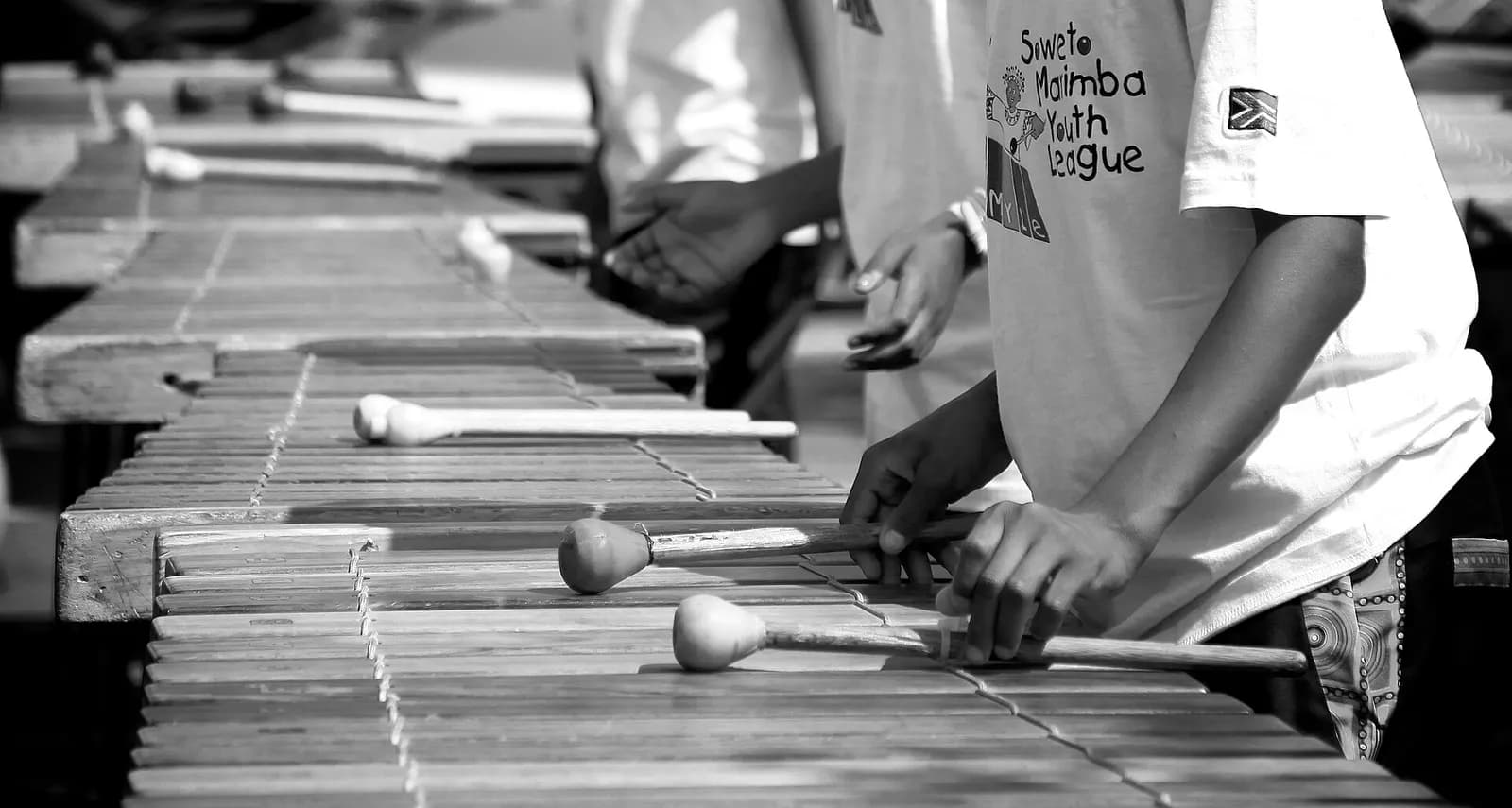
South Africa never had just one sound. Cape Jazz came out of District Six in the 1960s and 1970s, bubblegum and protest songs lit up the 1980s, kwaito owned the 1990s, house went global in the 2000s, and Amapiano took over everything from 2019. Each generation took what came before and made it theirs, turning jazz horns into protest, township slang into pop hooks, and local beats into songs the whole world wanted to dance to.
Moments
The moments South Africa's music history turned on
Frequently Asked Questions
What is Amapiano and where did it come from?+
Amapiano is a music genre that emerged from South Africa's townships (particularly Soweto and Pretoria) in the late 2010s. It blends deep house, jazz, and distinctive log drum patterns into a laid-back yet danceable sound. Artists like Kabza De Small, DJ Maphorisa, and Master KG helped take it from local house parties to global streaming charts. Tyla's Grammy-winning Water brought Amapiano-influenced pop to mainstream Western audiences.
Last reviewed: 2026-03
Who are the most important figures in South African music history?+
South Africa's music history has been shaped by iconic figures across generations. Miriam Makeba and Hugh Masekela carried the sound of resistance during apartheid. Abdullah Ibrahim defined Cape Jazz from District Six. Brenda Fassie became the voice of township pop. Ladysmith Black Mambazo brought Zulu choral music to the world. More recently, Black Coffee took Afro House to Ibiza and Coachella, while Tyla represents the newest wave of South African global pop stars.
Last reviewed: 2026-03
What is Cape Jazz?+
Cape Jazz is a music style that originated in Cape Town's District Six neighbourhood in the 1960s. It fuses traditional African rhythms, Cape Malay melodies, and American bebop into a distinctive sound. Abdullah Ibrahim (born in District Six) and Hugh Masekela are its most celebrated practitioners. The genre carries deep political significance: District Six was destroyed under apartheid's forced removals, making Cape Jazz both a musical tradition and an act of cultural preservation.
Last reviewed: 2026-03
How did apartheid shape South African music?+
Apartheid profoundly influenced every era of South African music. Many artists were forced into exile (Miriam Makeba for 30 years, Hugh Masekela for decades) turning their music into international protest. During the 1980s, bubblegum pop and protest songs coexisted. After liberation in 1994, kwaito emerged as the soundtrack of freedom, with artists like Bongo Maffin and TKZee embodying post-apartheid optimism. The political context gives South African music an emotional depth that transcends genre.
Last reviewed: 2026-03
The Story Behind
The stories behind South Africa's defining songs
Mannenberg
Abdullah Ibrahim
By Abdullah Ibrahim's own recollection, Mannenberg was recorded in one take. In June 1974, on one of his brief visits home from exile, Ibrahim, who still released records under his former…
Read the storyAsimbonanga
Johnny Clegg
Asimbonanga is Zulu for we have not seen him. When Johnny Clegg's band Savuka released the song as a 12-inch single in 1986, Nelson Mandela had been in prison since 1962 on Robben Island.…
Read the storyJerusalema
Master KG
Master KG recorded the beat on 11 August 2019, posted a snippet on social media and liked the response enough to call in the singer he describes as his sister, Nomcebo Zikode, to finish the…
Read the storySources & References
- 1In Township Tonight! South Africa's Black City Music and Theatre — David Coplan, 2007Book
- 2A Change Is Gonna Come: Music, Race & the Soul of America — Craig Werner, 2006Book
- 3Amapiano: South Africa's new sound taking over the world — BBC News, 2023
- 4Hugh Masekela and the art of protest music — The Guardian, 2018
- 5Graceland at 40: How Paul Simon's controversial album changed world music — Rolling Stone, 2026
Further Reading
About This Article
This page is based on documented music history, artist biographies, chart data, award records, and cross-referenced sources from music journalism and academic research.
Curated by the timeline.music editorial team.
▸Read the timeline as text
The sound of South Africa, decade by decade: 12 genres and 33 artists, from the 1940s to the 2020s.
- 1940s
- Isicathamiya with Solomon Linda.
- 1950s
- Isicathamiya with Solomon Linda.
- 1960s
- Isicathamiya with Ladysmith Black Mambazo; Jazz Pioneers with Hugh Masekela, Abdullah Ibrahim and Chris McGregor; Cape Jazz with Abdullah Ibrahim and Winston Mankunku; World / Crossover with Miriam Makeba and Hugh Masekela.
- 1970s
- Isicathamiya with Ladysmith Black Mambazo; Jazz Pioneers with Hugh Masekela, Abdullah Ibrahim and Chris McGregor; Cape Jazz with Abdullah Ibrahim, Basil Coetzee, Robbie Jansen and Winston Mankunku; World / Crossover with Miriam Makeba and Hugh Masekela.
- 1980s
- Isicathamiya with Ladysmith Black Mambazo; Jazz Pioneers with Hugh Masekela, Abdullah Ibrahim and Chris McGregor; Cape Jazz with Abdullah Ibrahim, Basil Coetzee, Robbie Jansen and Winston Mankunku; Bubblegum with Brenda Fassie, Yvonne Chaka Chaka and Sipho Hotstix Mabuse; World / Crossover with Miriam Makeba, Hugh Masekela and Johnny Clegg; Reggae with Lucky Dube.
- 1990s
- Isicathamiya with Ladysmith Black Mambazo; Jazz Pioneers with Hugh Masekela and Abdullah Ibrahim; Cape Jazz with Abdullah Ibrahim, Basil Coetzee and Robbie Jansen; Bubblegum with Brenda Fassie and Yvonne Chaka Chaka; Kwaito with Bongo Maffin, TKZee, Mandoza, Brenda Fassie and Mafikizolo; Afropop with Yvonne Chaka Chaka; World / Crossover with Miriam Makeba, Hugh Masekela and Johnny Clegg; Reggae with Lucky Dube.
- 2000s
- Isicathamiya with Ladysmith Black Mambazo; Jazz Pioneers with Hugh Masekela and Abdullah Ibrahim; Cape Jazz with Abdullah Ibrahim and Robbie Jansen; Kwaito with Bongo Maffin, Mandoza, Brenda Fassie and Mafikizolo; Afropop with Yvonne Chaka Chaka, Mafikizolo and Freshlyground; Afro House with Black Coffee; World / Crossover with Miriam Makeba and Johnny Clegg; Reggae with Lucky Dube.
- 2010s
- Isicathamiya with Ladysmith Black Mambazo; Jazz Pioneers with Hugh Masekela and Abdullah Ibrahim; Cape Jazz with Kyle Shepherd; Afropop with Mafikizolo, Freshlyground and The Soil; Gqom with Sho Madjozi, Distruction Boyz and Babes Wodumo; Indie / Alternative with Beatenberg, Jeremy Loops and Die Antwoord; Afro House with Black Coffee and Sun-El Musician; Amapiano with Kabza De Small and Master KG.
- 2020s
- Isicathamiya with Ladysmith Black Mambazo; Jazz Pioneers with Abdullah Ibrahim; Cape Jazz with Kyle Shepherd; Afropop with The Soil; Gqom with Sho Madjozi; Indie / Alternative with Beatenberg, Jeremy Loops and Die Antwoord; Afro House with Black Coffee and Sun-El Musician; Amapiano with Kabza De Small, Master KG, Nomcebo Zikode and Tyla.