country
Costa Rica
From Limón calypso and Guanacaste marimba to San José rock and global ranchera
Listen through Costa Rica
5 defining tracks in the order they were released, from 1993 to 2016, each with a line on why it matters.
Preview: plays 5 of 13 tracks.
- 1990s
- 2000s
- 2010s
30-second previews, streamed from Apple.
The Hitlist
The defining tracks from this region
Preview: 5 of 13 tracks
Soy Tico (con Editus)
Carlos GuzmánCarlos Guzmán Bermúdez is a Costa Rican composer, arranger, and singer best known as the author and voice of Soy Tico, the country's unofficial second anthem. He directs the group Gaviota and also composed Canto a la Abolición del Ejército, marking the 1948 abolition of Costa Rica's army. He received the national music prize Aquileo Echeverría in 2008.
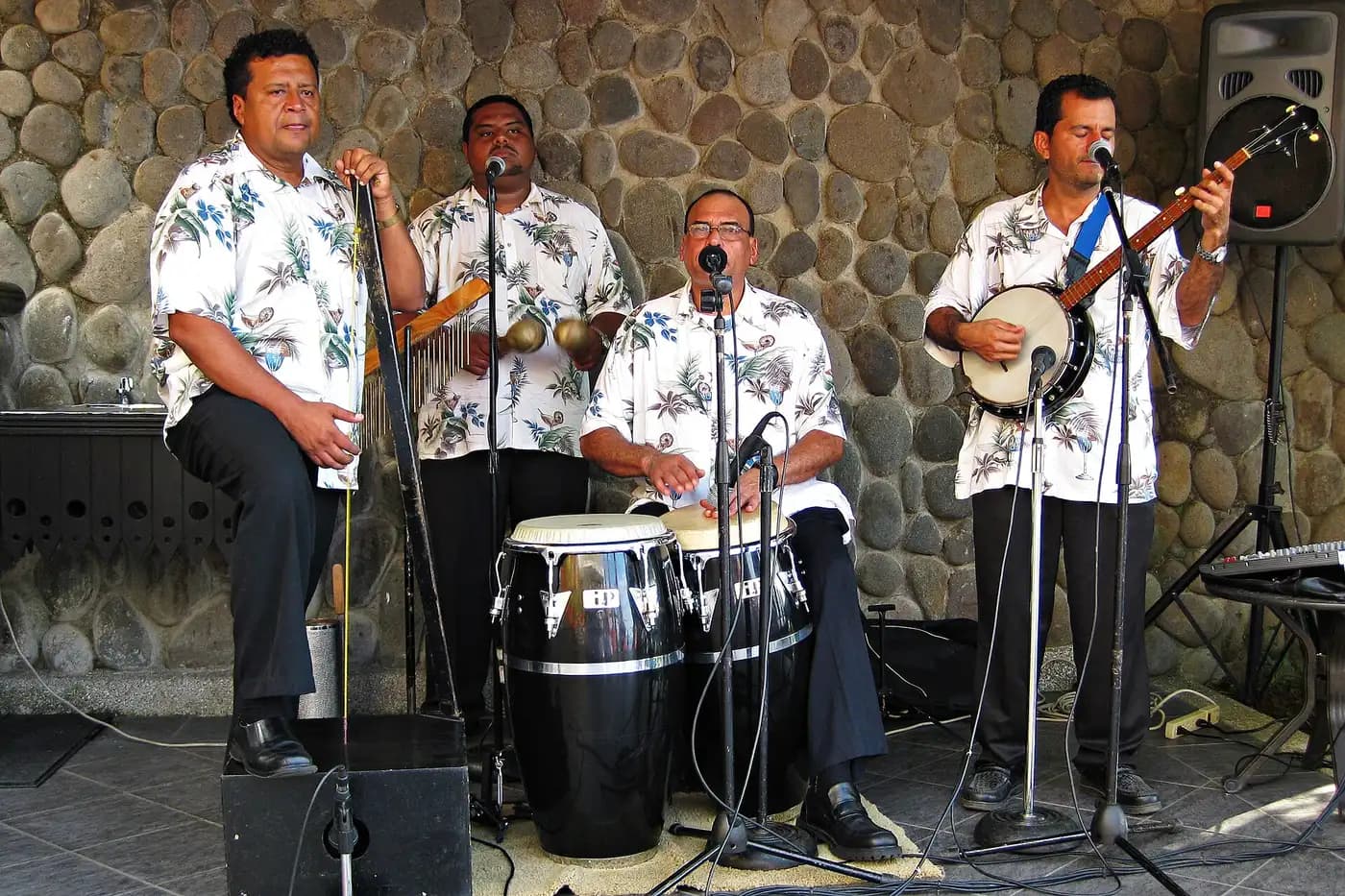
Costa Rica's musical map runs from the English-language calypso of Limón on the Caribbean coast, through the marimba and Punto Guanacasteco of the Pacific province, and into the brass-heavy cumbia orchestras and rock-fusion scenes that came out of San José from the 1970s on. Walter Ferguson kept the calypso limonense tradition alive for half a century. Carlos Guzmán wrote Soy Tico, the country's unofficial second anthem. Editus and Malpaís put tico music on Latin Grammy stages, Debi Nova won the 2021 Latin Grammy for the album 3:33, and Chavela Vargas, born in Heredia in 1919, became the most internationally recognised musician the country ever produced through her reinvention of Mexican ranchera. A small country that listens widely, and writes accordingly.
Frequently Asked Questions
What is calypso limonense?+
Calypso limonense is the Afro-Caribbean folk music of Limón province on Costa Rica's Caribbean coast. Sung in English and Limón Creole over acoustic guitar and box bass, it grew out of Jamaican and Trinidadian migration to the banana lands in the late 19th and early 20th centuries. Walter Ferguson, who lived in Cahuita and died in 2023 at the age of 103, was its most recorded composer and the artist most associated with the tradition.
Who is the most famous Costa Rican musician internationally?+
By career reach, Chavela Vargas is the most internationally recognised musician born in Costa Rica. She was born in Heredia in 1919, emigrated to Mexico as a teenager, and rebuilt Mexican ranchera around her voice over a six-decade career that ended with her death in 2012. Among artists who actually built Costa Rica's own music scene, Debi Nova won the 2021 Latin Grammy for Best Pop Vocal Album with 3:33, and Editus won Latin Grammys in 2000 for Tiempos and 2002 for Mundo as Rubén Blades' band.
What is Soy Tico and who wrote it?+
Soy Tico is Costa Rica's unofficial second national anthem, a folk song that runs through every school turno, Independence Day parade, and national football celebration. It was written by Carlos Guzmán Bermúdez, the composer who also wrote Canto a la Abolición del Ejército marking the 1948 abolition of Costa Rica's army. Guzmán received the national music prize Aquileo Echeverría in 2008.
What language do Costa Ricans sing in?+
Most Costa Rican music is in Spanish, but the country has a strong English and Limón Creole tradition on the Caribbean coast through calypso limonense. Bilingual pop is also common: Debi Nova writes in both English and Spanish, and rock bands like Los Ajenos drop English phrases into Spanish lyrics. Indigenous Bribri and Cabécar communities have their own oral musical traditions, though they rarely surface on commercial recordings.
What is the difference between Costa Rican cumbia and Colombian cumbia?+
Colombian cumbia is the original folk tradition with deep Afro-Indigenous roots and tight, fast accordion-driven arrangements. Costa Rican cumbia, played by bands like Marfil and Orquesta La Solución, is a brass-heavy dance orchestra style that grew up alongside salsa in the 1970s and 80s. It is slower, more melodic, and built for turnos, weddings, and Sunday family dances rather than the carnival circuit.
What is the most active Costa Rican music scene right now?+
San José's pop and urbano scene is the most active commercially, with Debi Nova winning international awards and crews like 424 building a homegrown hip-hop sound. The rock and folk-fusion scene around bands like Editus, Malpaís, and Percance also remains strong on stages and festivals, and calypso limonense gets a yearly spotlight at the Festival Internacional de Calypso de Cahuita.
Last reviewed: 2026-05
Sources & References
- 1Música popular en Costa Rica — Manuel Monestel, 2005Book
- 2Ritmo, canción e identidad: Una historia sociocultural del calypso limonense — Manuel Monestel, 2005Book
- 3Walter Ferguson, the calypsonian of Cahuita, dies at 103 — The Tico Times, 2023
- 4Debi Nova wins Best Pop Vocal Album at the 22nd Latin Grammy Awards — Latin Recording Academy, 2021
- 5Music of Costa Rica — Wikipedia contributors, 2024
Further Reading
About This Article
This page is based on documented music history, artist biographies, chart and award records, and cross-referenced sources from music journalism and academic research on Central American and Caribbean music.
Curated by the timeline.music editorial team.
▸Read the timeline as text
The sound of Costa Rica, decade by decade: 5 genres and 17 artists, from the 1950s to the 2020s.
- 1950s
- Calypso Limonense with Walter Ferguson.
- 1960s
- Calypso Limonense with Walter Ferguson.
- 1970s
- Típica Tica with Carlos Guzmán; Calypso Limonense with Walter Ferguson; Tropical Tico with Marfil.
- 1980s
- Típica Tica with Carlos Guzmán; Calypso Limonense with Walter Ferguson and Cantoamérica; Tropical Tico with Marfil and Orquesta La Solución; Tico Rock with Adrián Goizueta.
- 1990s
- Típica Tica with Carlos Guzmán and Manuel Obregón; Calypso Limonense with Walter Ferguson and Cantoamérica; Tropical Tico with Marfil and Orquesta La Solución; Tico Rock with Adrián Goizueta, Editus, Gandhi, Percance and Los Ajenos.
- 2000s
- Típica Tica with Carlos Guzmán and Manuel Obregón; Calypso Limonense with Walter Ferguson and Cantoamérica; Tropical Tico with Marfil, Orquesta La Solución and Sonámbulo Psicotropical; Tico Rock with Adrián Goizueta, Editus, Gandhi, Percance, Los Ajenos, Malpaís and Akasha; Tico Pop with Debi Nova.
- 2010s
- Típica Tica with Carlos Guzmán and Manuel Obregón; Calypso Limonense with Walter Ferguson and Cantoamérica; Tropical Tico with Marfil, Orquesta La Solución and Sonámbulo Psicotropical; Tico Rock with Adrián Goizueta, Editus, Gandhi, Percance, Los Ajenos, Malpaís and Akasha; Tico Pop with Debi Nova and 424.
- 2020s
- Típica Tica with Carlos Guzmán and Manuel Obregón; Calypso Limonense with Cantoamérica; Tropical Tico with Orquesta La Solución; Tico Rock with Editus; Tico Pop with Debi Nova and 424.